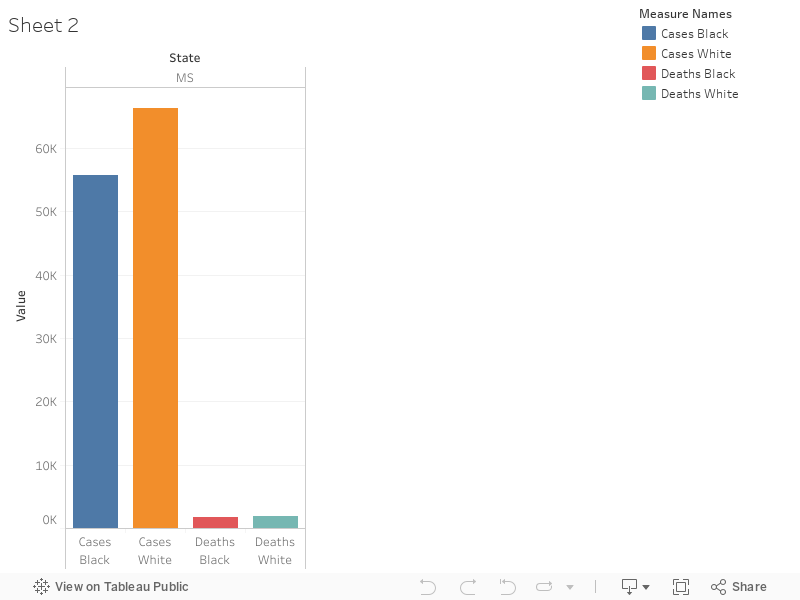
{"id":887,"date":"2020-12-06T22:43:53","date_gmt":"2020-12-07T03:43:53","guid":{"rendered":"https:\/\/nyujournalismprojects.org\/gdjfall20\/?p=887"},"modified":"2020-12-06T22:43:53","modified_gmt":"2020-12-07T03:43:53","slug":"sydneys-revised-viz-and-draft","status":"publish","type":"post","link":"https:\/\/nyujournalismprojects.org\/gdjfall20\/index.php\/2020\/12\/06\/sydneys-revised-viz-and-draft\/","title":{"rendered":"Sydney&#8217;s Revised Viz and Draft"},"content":{"rendered":"<p>Just an hour south of Tupelo lies Mississippi State University, nestled near the town of Starkville, or what others call the \u201cGolden Triangle.\u201d David Buys, an assistant professor in the Department of Health at MSU, has watched the coronavirus pandemic escalate since March. He says that the rate of coronavirus cases has climbed in the last few months in his home of Mississippi. <\/p>\n<p>When Governor Tate Reeves began to create a stay at home order for the state, coronavirus cases were already increasing. On April 1, a statewide stay at home order was enforced to decrease contamination, except for businesses and services deemed essential, which were many. Gov. Reeves enforced a mask mandate in May, which required everyone to wear a face mask in public when social distancing was not possible. <\/p>\n<p>But many have said that Reeves was late to enforce policies, and he has relaxed his mandates too soon. Reeves lifted the mask mandate in September, which didn\u2019t help the new onslaught of cases that came in the Fall. Specifically, the race data has shown that coronavirus cases have increased among white communities, while the amount of cases has decreased among black communities. <\/p>\n<p>Buys, the professor from MSU, says that the messaging from the state government could be one of the reasons that cases have increased. According to data published in November, this is the first time since June that the white community has exceeded the black community in coronavirus cases. Buys said this could be because of the political affiliations between white communities and the Republican government. <\/p>\n<p>\u201cI think the presidential campaign that has been so drawn on racial lines has emboldened white people to resist the precautions,\u201d he said. \u201cI think the federal government\u2019s response has called into question the validity of science and the recommendations that have come forth from our public health and medical experts.\u201d <\/p>\n<p>Governor Reeves, a friend of Donald Trump\u2019s and a first-term Republican, in March decided to wait and see how coronavirus would affect the state. He waited until April to declare stay at home orders, while local governors began restrictions as early as March 15. Reeves has continuously lifted state mandates since August and it has shown an uptick in cases. <\/p>\n<p>Buys says that the number of cases will increase if Reeves doesn\u2019t return the state back to a face mask mandate and create more social distancing restrictions. <\/p>\n<p>\u201cAfter the governor lifted the statewide mask mandate, and he has begun to implement pocket mandates depending on rates county by county. We know that people travel between counties, so they are going between counties and the public health opinion would be that the isolated mandates are not as effective as statewide mandates.\u201d <\/p>\n<p>Buys said that while he\u2019s noticed an increase of mask-wearing and social distancing in black communities of Mississippi, the discretion among white communities has decreased, and this could be leading to the increase. According to data released by Mississippi State University in November, the number of cases has increased much higher in the white community, up to 57,924 cases. While among African-Americans, the number of cases is about 50,535. <\/p>\n<p>Anecdotally, Buys said that he\u2019s noticed more white people attending schools in person, traveling out-of-state, and doing activities that are not safe according to the Centers for Disease Control and Prevention.<\/p>\n<p>\u201cThere appear to be many more minority families that are taking advantage of virtual schooling options than those that are not.\u201d <\/p>\n<p>The reason for this, Buys said, could also be due to the fact that black communities were hit hard by COVID-19 at the beginning of the pandemic, so there is a large increase in social distancing in this community. While white families, who have been notoriously Republican in the state, have leaned towards the information given by Governor Reeves and President Trump, which has led to confusion. <\/p>\n<p>\u201cWhite folks who were maybe more likely to be Trump supporters also bought the anti-science rhetoric that was coming from that administration.\u201d <\/p>\n<p>As you can see here, both the rise in cases and deaths are among white residents, while the number of cases and deaths among black residents has decreased. <\/p>\n<div class='tableauPlaceholder' id='viz1607312051563' style='position: relative'><noscript><a href='#'><img alt=' ' src='https:&#47;&#47;public.tableau.com&#47;static&#47;images&#47;Bo&#47;Book1_16073094769080&#47;Sheet2&#47;1_rss.png' style='border: none' \/><\/a><\/noscript><object class='tableauViz'  style='display:none;'><param name='host_url' value='https%3A%2F%2Fpublic.tableau.com%2F' \/><param name='embed_code_version' value='3' \/><param name='site_root' value='' \/><param name='name' value='Book1_16073094769080&#47;Sheet2' \/><param name='tabs' value='no' \/><param name='toolbar' value='yes' \/><param name='static_image' value='https:&#47;&#47;public.tableau.com&#47;static&#47;images&#47;Bo&#47;Book1_16073094769080&#47;Sheet2&#47;1.png' \/><param name='animate_transition' value='yes' \/><param name='display_static_image' value='yes' \/><param name='display_spinner' value='yes' \/><param name='display_overlay' value='yes' \/><param name='display_count' value='yes' \/><param name='language' value='en' \/><param name='filter' value='publish=yes' \/><\/object><\/div>\n<p>                <script type='text\/javascript'>                    var divElement = document.getElementById('viz1607312051563');                    var vizElement = divElement.getElementsByTagName('object')[0];                    vizElement.style.width='100%';vizElement.style.height=(divElement.offsetWidth*0.75)+'px';                    var scriptElement = document.createElement('script');                    scriptElement.src = 'https:\/\/public.tableau.com\/javascripts\/api\/viz_v1.js';                    vizElement.parentNode.insertBefore(scriptElement, vizElement);                <\/script><\/p>\n<p>This graph shows the difference in the number of cases between the two communities. <\/p>\n<p>But Yulanda Haddix, who is the local president of the Mississippi NAACP Chapter in Tupelo, said that the data is showing a skewed version of the real crisis. She said that she thinks that African-Americans are still being infected at a higher rate but it\u2019s not being presented properly.<\/p>\n<p>\u201cCOVID is not decreasing in the black community, it\u2019s just not reported in the black community. We don\u2019t go and get COVID tested, it\u2019s not readily available,\u201d she said. \u201cWe live in a rural community, most of us don\u2019t have health insurance. When we get an illness we treat ourselves, and we aren\u2019t going to the doctor unless we have to go. That\u2019s why it\u2019s not reported as much.\u201d <\/p>\n<p>She said that although the data says differently, she believes that the African-American community is getting hit much harder. She said that because of systemic issues in Mississippi, many black residents don\u2019t have access to health insurance or testing clinics located near their homes. <\/p>\n<p>\u201cBecause we don\u2019t have the availability of health insurance, or primary care physicians, we are not going to be diagnosed. By holiday time, I think we are going to gather. All we have is family. I think it is more prevalent in our communities, we are just not being counted.\u201d <\/p>\n<p>The data trends are still showing that white communities are increasing in COVID cases. According to data by the COVID Tracking Project, about 42% of coronavirus cases in Mississippi are African-American, while 48% are white. Even though the numbers show that coronavirus cases have increased among the white community, she said that COVID is disproportionately affecting the black community. <\/p>\n<p>\u201cIn rural communities, or low-income or underserved, no one has three hours to get tested. And if you don\u2019t have health insurance, most of the time you can\u2019t get the test. Mississippi is the way it is because people allow it to be that way. The underserved continue to be underserved and the upper class is the upper class.\u201d <\/p>\n<p>While there are differences in the way that black and white communities are being affected, the data shows that coronavirus is affecting both communities at alarming rates. Some locals are saying that white residents don\u2019t necessarily believe in the health consequences of COVID-19. <\/p>\n<p>James Phillips, who said that many of his friends in Mississippi have contracted COVID-19, said that he thought the CDC guidelines are too restrictive and he thinks they are unnecessary. He said that he and his friends don\u2019t believe that coronavirus is as harmful as it&#8217;s portrayed on the media. <\/p>\n<p>\u201cIt was a big fear factor, for the ones at first who got it. But then they would get better, it was killing other people but it wasn\u2019t bad for them,\u201d he said. \u201cEveryone I talked to had the same story. None of the people I knew had it bad. I no longer fear it.\u201d <\/p>\n<p>\tSince Governor Reeves rescinded the mask mandate, many residents have felt that they can go outside freely without wearing masks. According to the Mississippi Free Press, this has been seen amongst white people. Phillips said that he is one of the residents who doesn\u2019t believe in the strict mask guidelines. <\/p>\n<p>\t\u201cI don\u2019t trust the guidelines. I have been without a mask since the pandemic started, except to get on a plane. I\u2019ve had no problems.\u201d <\/p>\n<p>\tInstead of issuing a statewide mask mandate, Governor Reeves has only enforced masks by county, and in counties that have the highest number of cases people are required to wear masks. While Reeves said that people should be wearing masks, there is no statewide law enforcing it. The number of cases is increasing, and as of December 5,  about 164,931 coronavirus cases have been recorded in Mississippi. Yet, many residents are still not wearing masks. <\/p>\n<p>\tAshton Pittman, a reporter for the Mississippi Free Press and a native Mississippian, said that he\u2019s seen people inside grocery stores and shops disregarding the CDC guidelines. <\/p>\n<p>\t\u201cIn some cases, people are defying the social distancing and defying masks to make a political statement,\u201d he said. \u201cI\u2019ve seen Republican politicians who are speaking at anti-masking events, a lot of these are happening in Desoto County.\u201d <\/p>\n<p>\tHe said that Governor Reeves has been confusing because he\u2019s trying to please both sides of the political spectrum, and he\u2019s been acting too late. <\/p>\n<p>\t\u201cA lot of people aren\u2019t taking him seriously. He\u2019s not making anyone happy cause he\u2019s trying to make everyone happy. There\u2019s also a black and white split,\u201d he said. \u201cWhite people in Mississippi tend to believe Donald Trump, and he\u2019s downplayed COVID-19. Black people don\u2019t listen to Donald Trump, they tend to listen to the advice of medical experts.\u201d <\/p>\n<p>\tHe also said that black people in Mississippi are being more careful because there were so many coronavirus related deaths early on in the pandemic. <\/p>\n<p>\t\u201cBlack people in Mississippi are more likely to know someone who died early on in the pandemic. White people should be taking this more seriously, but the politics are overruling it.\u201d <\/p>\n","protected":false},"excerpt":{"rendered":"<p>Just an hour south of Tupelo lies Mississippi State University, nestled near the town of Starkville, or what others call the \u201cGolden Triangle.\u201d David Buys, an assistant professor in the Department of Health at MSU, has watched the coronavirus pandemic escalate since March. He says that the rate of coronavirus cases has climbed in the [&hellip;]<\/p>\n","protected":false},"author":4,"featured_media":0,"comment_status":"closed","ping_status":"closed","sticky":false,"template":"","format":"standard","meta":{"footnotes":""},"categories":[1],"tags":[],"yoast_head":"<!-- This site is optimized with the Yoast SEO plugin v22.4 - https:\/\/yoast.com\/wordpress\/plugins\/seo\/ -->\n<title>Sydney&#039;s Revised Viz and Draft - GDJ Fall 2020<\/title>\n<meta name=\"robots\" content=\"index, follow, max-snippet:-1, max-image-preview:large, max-video-preview:-1\" \/>\n<link rel=\"canonical\" href=\"https:\/\/nyujournalismprojects.org\/gdjfall20\/index.php\/2020\/12\/06\/sydneys-revised-viz-and-draft\/\" \/>\n<meta property=\"og:locale\" content=\"en_US\" \/>\n<meta property=\"og:type\" content=\"article\" \/>\n<meta property=\"og:title\" content=\"Sydney&#039;s Revised Viz and Draft - GDJ Fall 2020\" \/>\n<meta property=\"og:description\" content=\"Just an hour south of Tupelo lies Mississippi State University, nestled near the town of Starkville, or what others call the \u201cGolden Triangle.\u201d David Buys, an assistant professor in the Department of Health at MSU, has watched the coronavirus pandemic escalate since March. He says that the rate of coronavirus cases has climbed in the [&hellip;]\" \/>\n<meta property=\"og:url\" content=\"https:\/\/nyujournalismprojects.org\/gdjfall20\/index.php\/2020\/12\/06\/sydneys-revised-viz-and-draft\/\" \/>\n<meta property=\"og:site_name\" content=\"GDJ Fall 2020\" \/>\n<meta property=\"article:published_time\" content=\"2020-12-07T03:43:53+00:00\" \/>\n<meta property=\"og:image\" content=\"https:&#47;&#47;public.tableau.com&#47;static&#47;images&#47;Bo&#47;Book1_16073094769080&#47;Sheet2&#47;1_rss.png\" \/>\n<meta name=\"author\" content=\"Sydney\" \/>\n<meta name=\"twitter:card\" content=\"summary_large_image\" \/>\n<meta name=\"twitter:label1\" content=\"Written by\" \/>\n\t<meta name=\"twitter:data1\" content=\"Sydney\" \/>\n\t<meta name=\"twitter:label2\" content=\"Est. reading time\" \/>\n\t<meta name=\"twitter:data2\" content=\"8 minutes\" \/>\n<script type=\"application\/ld+json\" class=\"yoast-schema-graph\">{\"@context\":\"https:\/\/schema.org\",\"@graph\":[{\"@type\":\"WebPage\",\"@id\":\"https:\/\/nyujournalismprojects.org\/gdjfall20\/index.php\/2020\/12\/06\/sydneys-revised-viz-and-draft\/\",\"url\":\"https:\/\/nyujournalismprojects.org\/gdjfall20\/index.php\/2020\/12\/06\/sydneys-revised-viz-and-draft\/\",\"name\":\"Sydney's Revised Viz and Draft - GDJ Fall 2020\",\"isPartOf\":{\"@id\":\"https:\/\/nyujournalismprojects.org\/gdjfall20\/#website\"},\"datePublished\":\"2020-12-07T03:43:53+00:00\",\"dateModified\":\"2020-12-07T03:43:53+00:00\",\"author\":{\"@id\":\"https:\/\/nyujournalismprojects.org\/gdjfall20\/#\/schema\/person\/24f035a68a189d264182d78aff73a351\"},\"breadcrumb\":{\"@id\":\"https:\/\/nyujournalismprojects.org\/gdjfall20\/index.php\/2020\/12\/06\/sydneys-revised-viz-and-draft\/#breadcrumb\"},\"inLanguage\":\"en-US\",\"potentialAction\":[{\"@type\":\"ReadAction\",\"target\":[\"https:\/\/nyujournalismprojects.org\/gdjfall20\/index.php\/2020\/12\/06\/sydneys-revised-viz-and-draft\/\"]}]},{\"@type\":\"BreadcrumbList\",\"@id\":\"https:\/\/nyujournalismprojects.org\/gdjfall20\/index.php\/2020\/12\/06\/sydneys-revised-viz-and-draft\/#breadcrumb\",\"itemListElement\":[{\"@type\":\"ListItem\",\"position\":1,\"name\":\"Home\",\"item\":\"https:\/\/nyujournalismprojects.org\/gdjfall20\/\"},{\"@type\":\"ListItem\",\"position\":2,\"name\":\"Sydney&#8217;s Revised Viz and Draft\"}]},{\"@type\":\"WebSite\",\"@id\":\"https:\/\/nyujournalismprojects.org\/gdjfall20\/#website\",\"url\":\"https:\/\/nyujournalismprojects.org\/gdjfall20\/\",\"name\":\"GDJ Fall 2020\",\"description\":\"\",\"potentialAction\":[{\"@type\":\"SearchAction\",\"target\":{\"@type\":\"EntryPoint\",\"urlTemplate\":\"https:\/\/nyujournalismprojects.org\/gdjfall20\/?s={search_term_string}\"},\"query-input\":\"required name=search_term_string\"}],\"inLanguage\":\"en-US\"},{\"@type\":\"Person\",\"@id\":\"https:\/\/nyujournalismprojects.org\/gdjfall20\/#\/schema\/person\/24f035a68a189d264182d78aff73a351\",\"name\":\"Sydney\",\"image\":{\"@type\":\"ImageObject\",\"inLanguage\":\"en-US\",\"@id\":\"https:\/\/nyujournalismprojects.org\/gdjfall20\/#\/schema\/person\/image\/\",\"url\":\"https:\/\/secure.gravatar.com\/avatar\/509c8a03d9b8598b5e401ad6ead7a136?s=96&d=mm&r=g\",\"contentUrl\":\"https:\/\/secure.gravatar.com\/avatar\/509c8a03d9b8598b5e401ad6ead7a136?s=96&d=mm&r=g\",\"caption\":\"Sydney\"},\"url\":\"https:\/\/nyujournalismprojects.org\/gdjfall20\/index.php\/author\/saf619\/\"}]}<\/script>\n<!-- \/ Yoast SEO plugin. -->","yoast_head_json":{"title":"Sydney's Revised Viz and Draft - GDJ Fall 2020","robots":{"index":"index","follow":"follow","max-snippet":"max-snippet:-1","max-image-preview":"max-image-preview:large","max-video-preview":"max-video-preview:-1"},"canonical":"https:\/\/nyujournalismprojects.org\/gdjfall20\/index.php\/2020\/12\/06\/sydneys-revised-viz-and-draft\/","og_locale":"en_US","og_type":"article","og_title":"Sydney's Revised Viz and Draft - GDJ Fall 2020","og_description":"Just an hour south of Tupelo lies Mississippi State University, nestled near the town of Starkville, or what others call the \u201cGolden Triangle.\u201d David Buys, an assistant professor in the Department of Health at MSU, has watched the coronavirus pandemic escalate since March. He says that the rate of coronavirus cases has climbed in the [&hellip;]","og_url":"https:\/\/nyujournalismprojects.org\/gdjfall20\/index.php\/2020\/12\/06\/sydneys-revised-viz-and-draft\/","og_site_name":"GDJ Fall 2020","article_published_time":"2020-12-07T03:43:53+00:00","og_image":[{"url":"https:&#47;&#47;public.tableau.com&#47;static&#47;images&#47;Bo&#47;Book1_16073094769080&#47;Sheet2&#47;1_rss.png"}],"author":"Sydney","twitter_card":"summary_large_image","twitter_misc":{"Written by":"Sydney","Est. reading time":"8 minutes"},"schema":{"@context":"https:\/\/schema.org","@graph":[{"@type":"WebPage","@id":"https:\/\/nyujournalismprojects.org\/gdjfall20\/index.php\/2020\/12\/06\/sydneys-revised-viz-and-draft\/","url":"https:\/\/nyujournalismprojects.org\/gdjfall20\/index.php\/2020\/12\/06\/sydneys-revised-viz-and-draft\/","name":"Sydney's Revised Viz and Draft - GDJ Fall 2020","isPartOf":{"@id":"https:\/\/nyujournalismprojects.org\/gdjfall20\/#website"},"datePublished":"2020-12-07T03:43:53+00:00","dateModified":"2020-12-07T03:43:53+00:00","author":{"@id":"https:\/\/nyujournalismprojects.org\/gdjfall20\/#\/schema\/person\/24f035a68a189d264182d78aff73a351"},"breadcrumb":{"@id":"https:\/\/nyujournalismprojects.org\/gdjfall20\/index.php\/2020\/12\/06\/sydneys-revised-viz-and-draft\/#breadcrumb"},"inLanguage":"en-US","potentialAction":[{"@type":"ReadAction","target":["https:\/\/nyujournalismprojects.org\/gdjfall20\/index.php\/2020\/12\/06\/sydneys-revised-viz-and-draft\/"]}]},{"@type":"BreadcrumbList","@id":"https:\/\/nyujournalismprojects.org\/gdjfall20\/index.php\/2020\/12\/06\/sydneys-revised-viz-and-draft\/#breadcrumb","itemListElement":[{"@type":"ListItem","position":1,"name":"Home","item":"https:\/\/nyujournalismprojects.org\/gdjfall20\/"},{"@type":"ListItem","position":2,"name":"Sydney&#8217;s Revised Viz and Draft"}]},{"@type":"WebSite","@id":"https:\/\/nyujournalismprojects.org\/gdjfall20\/#website","url":"https:\/\/nyujournalismprojects.org\/gdjfall20\/","name":"GDJ Fall 2020","description":"","potentialAction":[{"@type":"SearchAction","target":{"@type":"EntryPoint","urlTemplate":"https:\/\/nyujournalismprojects.org\/gdjfall20\/?s={search_term_string}"},"query-input":"required name=search_term_string"}],"inLanguage":"en-US"},{"@type":"Person","@id":"https:\/\/nyujournalismprojects.org\/gdjfall20\/#\/schema\/person\/24f035a68a189d264182d78aff73a351","name":"Sydney","image":{"@type":"ImageObject","inLanguage":"en-US","@id":"https:\/\/nyujournalismprojects.org\/gdjfall20\/#\/schema\/person\/image\/","url":"https:\/\/secure.gravatar.com\/avatar\/509c8a03d9b8598b5e401ad6ead7a136?s=96&d=mm&r=g","contentUrl":"https:\/\/secure.gravatar.com\/avatar\/509c8a03d9b8598b5e401ad6ead7a136?s=96&d=mm&r=g","caption":"Sydney"},"url":"https:\/\/nyujournalismprojects.org\/gdjfall20\/index.php\/author\/saf619\/"}]}},"_links":{"self":[{"href":"https:\/\/nyujournalismprojects.org\/gdjfall20\/index.php\/wp-json\/wp\/v2\/posts\/887"}],"collection":[{"href":"https:\/\/nyujournalismprojects.org\/gdjfall20\/index.php\/wp-json\/wp\/v2\/posts"}],"about":[{"href":"https:\/\/nyujournalismprojects.org\/gdjfall20\/index.php\/wp-json\/wp\/v2\/types\/post"}],"author":[{"embeddable":true,"href":"https:\/\/nyujournalismprojects.org\/gdjfall20\/index.php\/wp-json\/wp\/v2\/users\/4"}],"replies":[{"embeddable":true,"href":"https:\/\/nyujournalismprojects.org\/gdjfall20\/index.php\/wp-json\/wp\/v2\/comments?post=887"}],"version-history":[{"count":2,"href":"https:\/\/nyujournalismprojects.org\/gdjfall20\/index.php\/wp-json\/wp\/v2\/posts\/887\/revisions"}],"predecessor-version":[{"id":889,"href":"https:\/\/nyujournalismprojects.org\/gdjfall20\/index.php\/wp-json\/wp\/v2\/posts\/887\/revisions\/889"}],"wp:attachment":[{"href":"https:\/\/nyujournalismprojects.org\/gdjfall20\/index.php\/wp-json\/wp\/v2\/media?parent=887"}],"wp:term":[{"taxonomy":"category","embeddable":true,"href":"https:\/\/nyujournalismprojects.org\/gdjfall20\/index.php\/wp-json\/wp\/v2\/categories?post=887"},{"taxonomy":"post_tag","embeddable":true,"href":"https:\/\/nyujournalismprojects.org\/gdjfall20\/index.php\/wp-json\/wp\/v2\/tags?post=887"}],"curies":[{"name":"wp","href":"https:\/\/api.w.org\/{rel}","templated":true}]}}