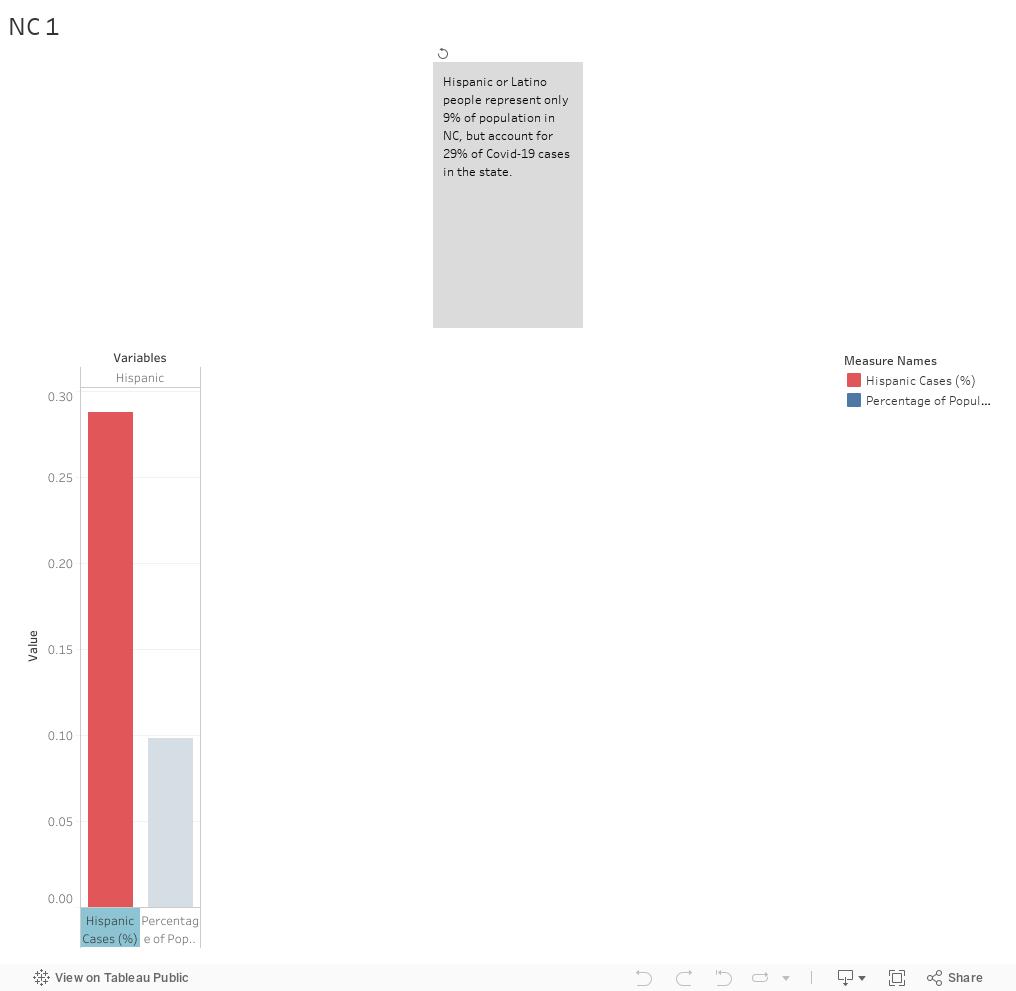
{"id":911,"date":"2020-12-07T09:48:44","date_gmt":"2020-12-07T14:48:44","guid":{"rendered":"https:\/\/nyujournalismprojects.org\/gdjfall20\/?p=911"},"modified":"2020-12-07T09:48:44","modified_gmt":"2020-12-07T14:48:44","slug":"marianas-revised-draft","status":"publish","type":"post","link":"https:\/\/nyujournalismprojects.org\/gdjfall20\/index.php\/2020\/12\/07\/marianas-revised-draft\/","title":{"rendered":"Mariana&#8217;s Revised Draft"},"content":{"rendered":"<p>NOTE: I still need to revise my visuals. I wasn\u2019t able to that this week because we had final work for our thesis in Studio 20.<\/p>\n<p>North Carolina: how construction sites contributed to Covid-19 cases among Hispanics<\/p>\n<p>Hispanics\/Latinos represent only 9% of the population but account for 28% of all cases in the state. A lot of them work in the construction sector, one that was deemed \u2018essential\u2019 during the pandemic even though construction sites are considered \u201chigh-risk\u201d settings for the disease<\/p>\n<p>Mariana Janj\u00e1como<\/p>\n<p>North Carolina\u2019s construction sites have contributed to form one of the state\u2019s most glaring disparities when it comes to ethnicity and Covid-19: the high prevalence of cases among the Hispanic community. Hispanics represent only 9% of the population but account for 28% of all Covid-19 cases in the state \u2014 and this percentage used to be even higher. In July, for example, Hispanics were 46% of all Covid-19 cases in North Carolina. One of the main factors that led to this situation is the fact that there are higher proportions of Hispanics working in essential jobs that make social distancing difficult. One of them is the construction sector, deemed \u2018essential\u2019 during the entire pandemic.<\/p>\n<div class='tableauPlaceholder' id='viz1605459798155' style='position: relative'><noscript><a href='#'><img alt=' ' src='https:&#47;&#47;public.tableau.com&#47;static&#47;images&#47;No&#47;NorthCarolinaandWyoming&#47;Histria1&#47;1_rss.png' style='border: none' \/><\/a><\/noscript><object class='tableauViz'  style='display:none;'><param name='host_url' value='https%3A%2F%2Fpublic.tableau.com%2F' \/><param name='embed_code_version' value='3' \/><param name='site_root' value='' \/><param name='name' value='NorthCarolinaandWyoming&#47;Histria1' \/><param name='tabs' value='no' \/><param name='toolbar' value='yes' \/><param name='static_image' value='https:&#47;&#47;public.tableau.com&#47;static&#47;images&#47;No&#47;NorthCarolinaandWyoming&#47;Histria1&#47;1.png' \/><param name='animate_transition' value='yes' \/><param name='display_static_image' value='yes' \/><param name='display_spinner' value='yes' \/><param name='display_overlay' value='yes' \/><param name='display_count' value='yes' \/><param name='language' value='en' \/><param name='filter' value='publish=yes' \/><\/object><\/div>\n<p>                <script type='text\/javascript'>                    var divElement = document.getElementById('viz1605459798155');                    var vizElement = divElement.getElementsByTagName('object')[0];                    vizElement.style.width='1016px';vizElement.style.height='991px';                    var scriptElement = document.createElement('script');                    scriptElement.src = 'https:\/\/public.tableau.com\/javascripts\/api\/viz_v1.js';                    vizElement.parentNode.insertBefore(scriptElement, vizElement);                <\/script><\/p>\n<p>On its website, the North Carolina Department of Health\u2019s Covid-19 Response team admits that \u201cfarms and meat and poultry processing plants along with construction sites throughout North Carolina appear to be high-risk settings for transmission of Covid-19 due to the nature of the work, the challenge for employees to practice social distancing and the continuous nature of the plant operations\u201d. <\/p>\n<p>According to Fiorella Horna, from El Centro Hispano, a Latino nonprofit organization dedicated to strengthening the community of Hispanics and Latinos in North Carolina, the big issue with construction workers was the transportation to construction sites. \u201cA lot of those workers share transportation to and from sites, they are taken by the contractors or the employers and sometimes those vehicles are packed, so that is where a lot of the concern is.\u201d Fiorella added that there was a bubble of clusters in construction sites in Charlotte, the largest city of North Carolina.<\/p>\n<p>Charlotte is part of Mecklenburg County, one of the two main urban counties in the state. There, the percentage of Hispanics is bigger than the general in the state \u2014 Hispanics represent 14% of the population in the county and only 9% in the state. And in there, too, the rate of Covid-19 cases among them is disproportionate: 21% of all cases in the county are among the Hispanic community. County officials also admit that at least a big part of that is because Hispanics work in jobs considered essential, mainly in the construction sector.<\/p>\n<p>Another issue that has contributed to clusters of Covid-19 among the Hispanic community is financial insecurity, workers who find themselves in a very difficult financial situation while afraid that they will get sick and have to miss work. \u201cThere are construction employers that provide healthcare and all the right warranties to workers, but there are some small businesses that just don\u2019t do that,\u201d explained Fiorella Horna. \u201cThen those small businesses tell workers that they should get tested if they feel symptoms, but some workers just don\u2019t do that, because if they are sick, they don\u2019t want to find out. They don\u2019t want to miss a day of work and get no payment.\u201d Besides contributing to the transmission of the disease, a scenario like this is also worrying because it means that the patient won\u2019t look for a doctor until the aggravation of symptoms, which is extremely dangerous. <\/p>\n<p>Another factor for worry among Hispanics, according to the Mecklenburg County officials, are the household conditions. Essential workers who are more exposed to the virus can spread the disease to their immediate family members. If they live not only with their kids, but also with their parents or grandparents, that creates multigenerational transmission, which can be very dangerous. <\/p>\n<p>In order to try to avoid construction sites becoming clusters of Covid-19, the Charlotte Commercial Construction Coalition (4C), a coalition of more than 30 Charlotte-area general contractors defined in April a series of rules that employers and employees of the sector should follow. But those are not enough to tranquilize the workers. So far, North Carolina registered 18 reported clusters in construction workplaces, according to state data. What they consider a cluster is a minimum of 5 cases with illness onsets or initial positive results within a 14-day period and plausible epidemiologic linkage between cases. <\/p>\n<p>More concerns and barriers<\/p>\n<p>The decision of considering construction workers as essential workers was, from the beginning, a source of safety concerns that ranged from household to transportation and workplace conditions. \u201cSome people started to express their concerns that construction sites would transform into clusters because of transportation and workplace conditions. It\u2019s not rare to see a lot of these workers sitting in a pickup truck together\u201d, said Alison Kuznitz, a journalist at the local newspaper The Observer who has been covering the pandemic in Mecklenburg County since the beginning.<\/p>\n<p>Kuznitz said she witnessed some efforts by the government to reaching the Hispanic population in the county. \u201cThey are doing campaigns in Spanish and briefings with Spanish subtitles; actually not only Spanish but they are translating the campaigns to ten different languages because we have immigrants from other parts of the world who don\u2019t speak English nor Spanish.\u201d According to her, grassroots organizations and food pantries have also been of huge help, since so many workers lost their jobs because of the pandemic or were unable to work due to the long-lasting effects of the disease.<\/p>\n<p>Fiorella Horna, from El Centro Hispano, said the organization used funds received from federal Covid-19 relief to hire new community wellness workers, all women, known among the Hispanic community as \u201cpromotoras de salud\u201d. These women work in close contact with the Hispanics bringing quality information and making the bridge between them and the health care services in the region. It is a way of eliminating the language barrier. <\/p>\n<p>Fiorella said while she recognizes that the work of the \u201cpromotoras\u201d may have been one of the reasons why the percentage of cases among the Hispanic community in North Carolina went down from 46% in July to 28% in November, it is still a public health issue \u2014 and the state has its responsibility over it. \u201cWe can help, but we can\u2019t be solely responsible for shifting numbers, of course. We believe that was done collectively.\u201d <\/p>\n<p>She also commented that the work that El Centro Hispano did was an example of North Carolina\u2019s strategy of infusing money on non-profits across the state to reach the Latino community. \u201cNow we continue to advocate, we continue to inform the decision-makers about all the challenges we face so that changes are made now thinking about the future, not only in the face of an immediate threat.\u201d   <\/p>\n<p>Not a New Problem <\/p>\n<p>The worrying situation of Hispanics during the pandemic of Covid-19 in North Carolina is, of course, an issue specific to 2020. But suffering from workplace injuries and illnesses is nothing new to Hispanics. Data from \u201cDeath on the Job 2020\u201d, a report from AFL-CIO (The American Federation of Labor and Congress of Industrial Organizations), shows that 67% of Latinos killed on the job were immigrants; their job fatality rate was higher than the national average. In 2018, there were 961 deaths of Hispanics because of fatal work injuries. Of those, 294 occurred within the construction industry.<\/p>\n<p>The same document also shows that Hispanics represent the largest number of people affected by Covid-19 by population size: 3.5 million persons were living in the hotspot counties around the country that were examined by the research. The report highlights the responsibility of the agencies in charge of enforcing working conditions and the federal administration. There were no standard procedures regarding that to follow across the country during this pandemic.<\/p>\n<p>According to CPWR (The Center for Construction Research and Training), a nonprofit dedicated to reducing occupational injuries, illnesses, and fatalities in the construction industry, in 2015 there were 2.8 million Hispanics working in construction in the United States. About 73% of them were born outside the U.S..<\/p>\n","protected":false},"excerpt":{"rendered":"<p>NOTE: I still need to revise my visuals. I wasn\u2019t able to that this week because we had final work for our thesis in Studio 20. North Carolina: how construction sites contributed to Covid-19 cases among Hispanics Hispanics\/Latinos represent only 9% of the population but account for 28% of all cases in the state. A [&hellip;]<\/p>\n","protected":false},"author":6,"featured_media":0,"comment_status":"closed","ping_status":"closed","sticky":false,"template":"","format":"standard","meta":{"footnotes":""},"categories":[1],"tags":[],"yoast_head":"<!-- This site is optimized with the Yoast SEO plugin v22.4 - https:\/\/yoast.com\/wordpress\/plugins\/seo\/ -->\n<title>Mariana&#039;s Revised Draft - GDJ Fall 2020<\/title>\n<meta name=\"robots\" content=\"index, follow, max-snippet:-1, max-image-preview:large, max-video-preview:-1\" \/>\n<link rel=\"canonical\" href=\"https:\/\/nyujournalismprojects.org\/gdjfall20\/index.php\/2020\/12\/07\/marianas-revised-draft\/\" \/>\n<meta property=\"og:locale\" content=\"en_US\" \/>\n<meta property=\"og:type\" content=\"article\" \/>\n<meta property=\"og:title\" content=\"Mariana&#039;s Revised Draft - GDJ Fall 2020\" \/>\n<meta property=\"og:description\" content=\"NOTE: I still need to revise my visuals. I wasn\u2019t able to that this week because we had final work for our thesis in Studio 20. North Carolina: how construction sites contributed to Covid-19 cases among Hispanics Hispanics\/Latinos represent only 9% of the population but account for 28% of all cases in the state. A [&hellip;]\" \/>\n<meta property=\"og:url\" content=\"https:\/\/nyujournalismprojects.org\/gdjfall20\/index.php\/2020\/12\/07\/marianas-revised-draft\/\" \/>\n<meta property=\"og:site_name\" content=\"GDJ Fall 2020\" \/>\n<meta property=\"article:published_time\" content=\"2020-12-07T14:48:44+00:00\" \/>\n<meta property=\"og:image\" content=\"https:&#47;&#47;public.tableau.com&#47;static&#47;images&#47;No&#47;NorthCarolinaandWyoming&#47;Histria1&#47;1_rss.png\" \/>\n<meta name=\"author\" content=\"Mariana\" \/>\n<meta name=\"twitter:card\" content=\"summary_large_image\" \/>\n<meta name=\"twitter:label1\" content=\"Written by\" \/>\n\t<meta name=\"twitter:data1\" content=\"Mariana\" \/>\n\t<meta name=\"twitter:label2\" content=\"Est. reading time\" \/>\n\t<meta name=\"twitter:data2\" content=\"7 minutes\" \/>\n<script type=\"application\/ld+json\" class=\"yoast-schema-graph\">{\"@context\":\"https:\/\/schema.org\",\"@graph\":[{\"@type\":\"WebPage\",\"@id\":\"https:\/\/nyujournalismprojects.org\/gdjfall20\/index.php\/2020\/12\/07\/marianas-revised-draft\/\",\"url\":\"https:\/\/nyujournalismprojects.org\/gdjfall20\/index.php\/2020\/12\/07\/marianas-revised-draft\/\",\"name\":\"Mariana's Revised Draft - GDJ Fall 2020\",\"isPartOf\":{\"@id\":\"https:\/\/nyujournalismprojects.org\/gdjfall20\/#website\"},\"datePublished\":\"2020-12-07T14:48:44+00:00\",\"dateModified\":\"2020-12-07T14:48:44+00:00\",\"author\":{\"@id\":\"https:\/\/nyujournalismprojects.org\/gdjfall20\/#\/schema\/person\/caf0d37d12af62f94ec797c5b5132c5e\"},\"breadcrumb\":{\"@id\":\"https:\/\/nyujournalismprojects.org\/gdjfall20\/index.php\/2020\/12\/07\/marianas-revised-draft\/#breadcrumb\"},\"inLanguage\":\"en-US\",\"potentialAction\":[{\"@type\":\"ReadAction\",\"target\":[\"https:\/\/nyujournalismprojects.org\/gdjfall20\/index.php\/2020\/12\/07\/marianas-revised-draft\/\"]}]},{\"@type\":\"BreadcrumbList\",\"@id\":\"https:\/\/nyujournalismprojects.org\/gdjfall20\/index.php\/2020\/12\/07\/marianas-revised-draft\/#breadcrumb\",\"itemListElement\":[{\"@type\":\"ListItem\",\"position\":1,\"name\":\"Home\",\"item\":\"https:\/\/nyujournalismprojects.org\/gdjfall20\/\"},{\"@type\":\"ListItem\",\"position\":2,\"name\":\"Mariana&#8217;s Revised Draft\"}]},{\"@type\":\"WebSite\",\"@id\":\"https:\/\/nyujournalismprojects.org\/gdjfall20\/#website\",\"url\":\"https:\/\/nyujournalismprojects.org\/gdjfall20\/\",\"name\":\"GDJ Fall 2020\",\"description\":\"\",\"potentialAction\":[{\"@type\":\"SearchAction\",\"target\":{\"@type\":\"EntryPoint\",\"urlTemplate\":\"https:\/\/nyujournalismprojects.org\/gdjfall20\/?s={search_term_string}\"},\"query-input\":\"required name=search_term_string\"}],\"inLanguage\":\"en-US\"},{\"@type\":\"Person\",\"@id\":\"https:\/\/nyujournalismprojects.org\/gdjfall20\/#\/schema\/person\/caf0d37d12af62f94ec797c5b5132c5e\",\"name\":\"Mariana\",\"image\":{\"@type\":\"ImageObject\",\"inLanguage\":\"en-US\",\"@id\":\"https:\/\/nyujournalismprojects.org\/gdjfall20\/#\/schema\/person\/image\/\",\"url\":\"https:\/\/secure.gravatar.com\/avatar\/5496187c88b75ec254f73f13487f2c93?s=96&d=mm&r=g\",\"contentUrl\":\"https:\/\/secure.gravatar.com\/avatar\/5496187c88b75ec254f73f13487f2c93?s=96&d=mm&r=g\",\"caption\":\"Mariana\"},\"url\":\"https:\/\/nyujournalismprojects.org\/gdjfall20\/index.php\/author\/mj2442\/\"}]}<\/script>\n<!-- \/ Yoast SEO plugin. -->","yoast_head_json":{"title":"Mariana's Revised Draft - GDJ Fall 2020","robots":{"index":"index","follow":"follow","max-snippet":"max-snippet:-1","max-image-preview":"max-image-preview:large","max-video-preview":"max-video-preview:-1"},"canonical":"https:\/\/nyujournalismprojects.org\/gdjfall20\/index.php\/2020\/12\/07\/marianas-revised-draft\/","og_locale":"en_US","og_type":"article","og_title":"Mariana's Revised Draft - GDJ Fall 2020","og_description":"NOTE: I still need to revise my visuals. I wasn\u2019t able to that this week because we had final work for our thesis in Studio 20. North Carolina: how construction sites contributed to Covid-19 cases among Hispanics Hispanics\/Latinos represent only 9% of the population but account for 28% of all cases in the state. A [&hellip;]","og_url":"https:\/\/nyujournalismprojects.org\/gdjfall20\/index.php\/2020\/12\/07\/marianas-revised-draft\/","og_site_name":"GDJ Fall 2020","article_published_time":"2020-12-07T14:48:44+00:00","og_image":[{"url":"https:&#47;&#47;public.tableau.com&#47;static&#47;images&#47;No&#47;NorthCarolinaandWyoming&#47;Histria1&#47;1_rss.png"}],"author":"Mariana","twitter_card":"summary_large_image","twitter_misc":{"Written by":"Mariana","Est. reading time":"7 minutes"},"schema":{"@context":"https:\/\/schema.org","@graph":[{"@type":"WebPage","@id":"https:\/\/nyujournalismprojects.org\/gdjfall20\/index.php\/2020\/12\/07\/marianas-revised-draft\/","url":"https:\/\/nyujournalismprojects.org\/gdjfall20\/index.php\/2020\/12\/07\/marianas-revised-draft\/","name":"Mariana's Revised Draft - GDJ Fall 2020","isPartOf":{"@id":"https:\/\/nyujournalismprojects.org\/gdjfall20\/#website"},"datePublished":"2020-12-07T14:48:44+00:00","dateModified":"2020-12-07T14:48:44+00:00","author":{"@id":"https:\/\/nyujournalismprojects.org\/gdjfall20\/#\/schema\/person\/caf0d37d12af62f94ec797c5b5132c5e"},"breadcrumb":{"@id":"https:\/\/nyujournalismprojects.org\/gdjfall20\/index.php\/2020\/12\/07\/marianas-revised-draft\/#breadcrumb"},"inLanguage":"en-US","potentialAction":[{"@type":"ReadAction","target":["https:\/\/nyujournalismprojects.org\/gdjfall20\/index.php\/2020\/12\/07\/marianas-revised-draft\/"]}]},{"@type":"BreadcrumbList","@id":"https:\/\/nyujournalismprojects.org\/gdjfall20\/index.php\/2020\/12\/07\/marianas-revised-draft\/#breadcrumb","itemListElement":[{"@type":"ListItem","position":1,"name":"Home","item":"https:\/\/nyujournalismprojects.org\/gdjfall20\/"},{"@type":"ListItem","position":2,"name":"Mariana&#8217;s Revised Draft"}]},{"@type":"WebSite","@id":"https:\/\/nyujournalismprojects.org\/gdjfall20\/#website","url":"https:\/\/nyujournalismprojects.org\/gdjfall20\/","name":"GDJ Fall 2020","description":"","potentialAction":[{"@type":"SearchAction","target":{"@type":"EntryPoint","urlTemplate":"https:\/\/nyujournalismprojects.org\/gdjfall20\/?s={search_term_string}"},"query-input":"required name=search_term_string"}],"inLanguage":"en-US"},{"@type":"Person","@id":"https:\/\/nyujournalismprojects.org\/gdjfall20\/#\/schema\/person\/caf0d37d12af62f94ec797c5b5132c5e","name":"Mariana","image":{"@type":"ImageObject","inLanguage":"en-US","@id":"https:\/\/nyujournalismprojects.org\/gdjfall20\/#\/schema\/person\/image\/","url":"https:\/\/secure.gravatar.com\/avatar\/5496187c88b75ec254f73f13487f2c93?s=96&d=mm&r=g","contentUrl":"https:\/\/secure.gravatar.com\/avatar\/5496187c88b75ec254f73f13487f2c93?s=96&d=mm&r=g","caption":"Mariana"},"url":"https:\/\/nyujournalismprojects.org\/gdjfall20\/index.php\/author\/mj2442\/"}]}},"_links":{"self":[{"href":"https:\/\/nyujournalismprojects.org\/gdjfall20\/index.php\/wp-json\/wp\/v2\/posts\/911"}],"collection":[{"href":"https:\/\/nyujournalismprojects.org\/gdjfall20\/index.php\/wp-json\/wp\/v2\/posts"}],"about":[{"href":"https:\/\/nyujournalismprojects.org\/gdjfall20\/index.php\/wp-json\/wp\/v2\/types\/post"}],"author":[{"embeddable":true,"href":"https:\/\/nyujournalismprojects.org\/gdjfall20\/index.php\/wp-json\/wp\/v2\/users\/6"}],"replies":[{"embeddable":true,"href":"https:\/\/nyujournalismprojects.org\/gdjfall20\/index.php\/wp-json\/wp\/v2\/comments?post=911"}],"version-history":[{"count":2,"href":"https:\/\/nyujournalismprojects.org\/gdjfall20\/index.php\/wp-json\/wp\/v2\/posts\/911\/revisions"}],"predecessor-version":[{"id":913,"href":"https:\/\/nyujournalismprojects.org\/gdjfall20\/index.php\/wp-json\/wp\/v2\/posts\/911\/revisions\/913"}],"wp:attachment":[{"href":"https:\/\/nyujournalismprojects.org\/gdjfall20\/index.php\/wp-json\/wp\/v2\/media?parent=911"}],"wp:term":[{"taxonomy":"category","embeddable":true,"href":"https:\/\/nyujournalismprojects.org\/gdjfall20\/index.php\/wp-json\/wp\/v2\/categories?post=911"},{"taxonomy":"post_tag","embeddable":true,"href":"https:\/\/nyujournalismprojects.org\/gdjfall20\/index.php\/wp-json\/wp\/v2\/tags?post=911"}],"curies":[{"name":"wp","href":"https:\/\/api.w.org\/{rel}","templated":true}]}}